Your Brand Should Do More Than Just “Stand Out”
Standing out is easy. Being remembered is hard.
One of the most common pieces of advice you’ll hear in marketing and branding is this: “You need to stand out.” Or the classic line you see in a lot of IG bios from designers and studios: “Disruptive branding that stands out!” I’m not dogging on those services here, just using them as an example because it’s such a common way the industry talks about branding.
And on the surface, it sounds like pretty solid advice. Attention is a damn hot commodity right now in the age of social media. Businesses operate in crowded markets, attention is scarce, and if people don’t notice you, they won’t buy from you. So the logic follows that if you want to succeed, you’ve got to stand out.
Makes sense, right?
Well, kind of. But the longer we’ve been working with brands, the more I’ve realised that just “standing out” is actually pretty terrible advice when it’s taken at face value. Because standing out is easy. You can stand out by being louder than everyone else, by doing something weird and unexpected, or by picking colours nobody else is using. There are a thousand ways to grab attention for a hot minute.
But none of those things mean people will trust you. None of those things mean people will remember you. And more often than not, none of those things will still make sense for your business five years from now.
The brands that actually last usually aren’t the ones trying their damn hardest just to stand out. They’re the ones that have a clear point of view, a consistent way of showing up, and a reputation that builds slowly over time. (Ironically, that’s usually what ends up making them stand out anyway.)
To make this a bit more tangible, I’ll give you an example of one of my favourite embodiments of this: Buck Mason
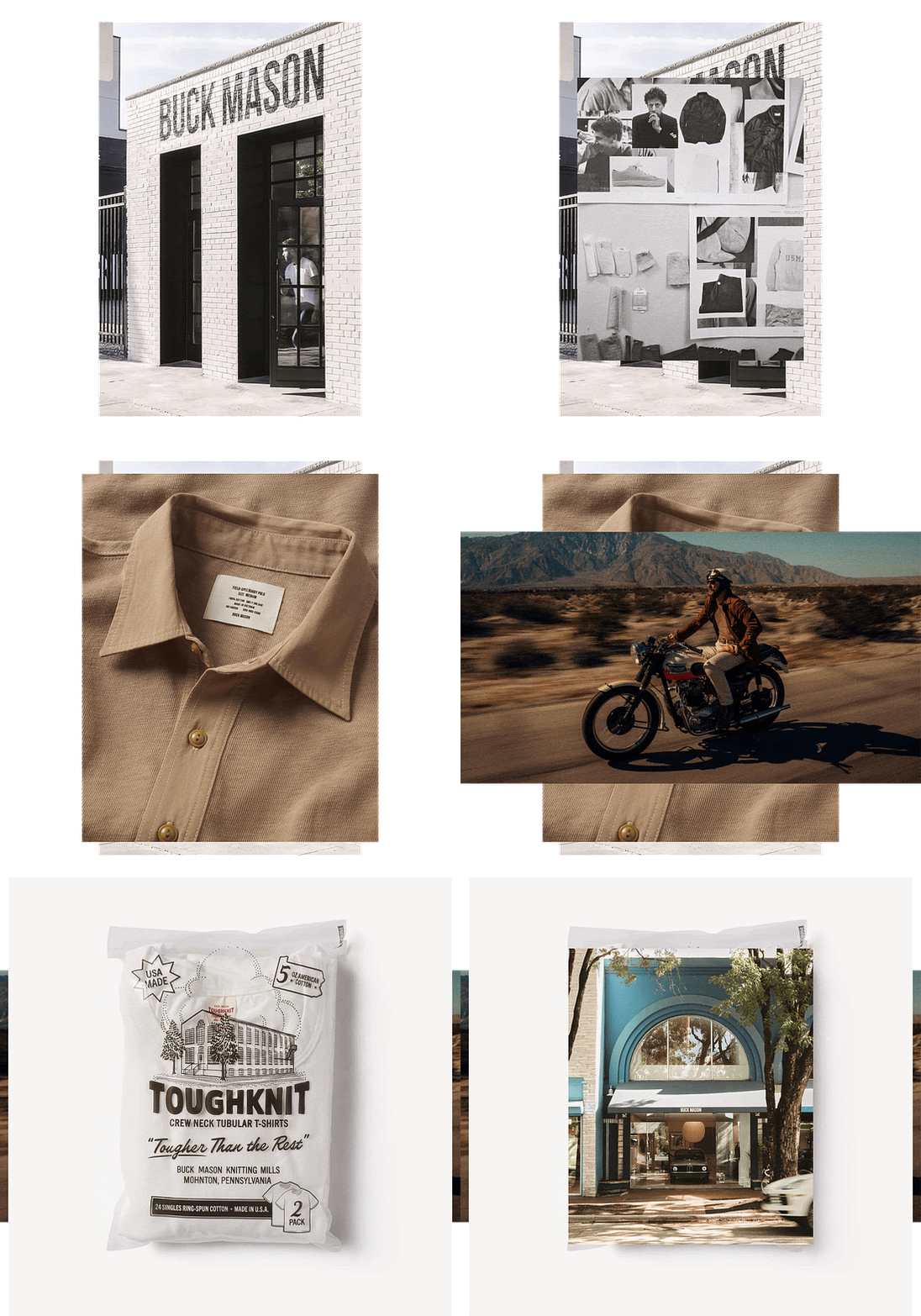
Buck Mason doesn’t have what most people would call “stand out” branding. Their logos are simple. Their typography is restrained. Their colour palette is quiet. There’s nothing loud or attention-seeking about the identity itself."
But the universe they’ve built around that brand is incredibly strong. The photography, the casting, the locations, the styling, the tone of the brand. Everything works together to create a very specific feeling. When you come across Buck Mason it feels highly considered, and totally timeless. The brand isn’t trying to shout over everyone else. It’s simply very confident in what it is.
And because of that consistency and intentionality, the brand becomes recognisable. People who know, know. They trust it, and they want to spend time in that world.
Now, chances are, if you’re reading this, you might not own a business like Buck Mason. A sexy fashion brand has a bit of an easier time creating that kind of world around it. It’s a little harder if you’re hanging drywall, changing tires, or slinging flat whites at the neighbourhood café. But the underlying principles carry over regardless of what kind of business you’re running.
If you’re starting a brand or thinking about a redesign, here are three things worth thinking about that will set you up far better than simply trying to “stand out.”
The first is identifying what you actually stand for and who you’re trying to attract. I wrote a piece about this a few weeks back, which I’ll link to at the bottom, but the short version is that chasing attention through trends rarely leads to a strong business. You might get a quick spike of attention if you jump on the latest design trend or viral moment, but if it doesn’t genuinely fit who you are as a business, that attention doesn’t matter all that much. The brands that build real momentum usually have a very clear understanding of why they exist and who they are trying to serve. When that’s dialled in, the right people start recognising themselves in what you’re up to.
The second thing is thinking about application. It’s all well and good getting set up with a strong logo, a solid type system, and a colour palette you love. But how those elements actually show up in the real world is where a brand really comes to life. How does it appear on signage, packaging, menus, vehicles, uniforms, social posts, your website, and your physical space? The strongest brands aren’t letting their logo do all the heavy lifting alone; they’re recognised by how consistently their whole identity shows up across all of these touchpoints.
The third thing is investing in telling your story. In a world where AI can summarise almost anything and information is everywhere, the “how” behind most businesses is no longer that mysterious. But the “why” is still incredibly powerful. Your story, your perspective, your team, and the way you approach what you do is something nobody else can replicate. Whether that means hiring a great photographer to capture the real feeling of your business, getting comfortable speaking on camera, or even writing longer pieces that share some insight into what you’re building, those things help people connect with your brand in a much deeper way.
So if you’re thinking about a redesign, launching a new business, or just feeling like your brand needs a refresh, it might be worth pausing before asking the usual question of “How do we stand out?” A much better question is: What do we want to be known for?
Because the brands that last usually aren’t the ones chasing attention every few years, but the ones that build a clear reputation over time. They show up consistently, they know who they’re for, who they're not for, and they keep reinforcing that same signal again and again and again, until people start to trust it.
Standing out might get someone to notice you once, or like your post. But standing for something is what’s gonna keep ‘em coming back.
Rory