So… What do You Actually Get From a Branding Project?
A breakdown of what branding projects actually include and why they scale with the business.
One of the phrases you’ve probably heard floating around the design world is: “A logo is not a brand.”
Hell, I’m pretty sure it’s the first topic I did a video or newsletter on. But after having seen this topic be rehashed and re-ran through ChatGPT for as many carousels as possible among the Design Community, it got me thinking about: What should you expect from a Brand?
Not in a bigger picture, “How people describe your business when they talk about it” or “A feeling that it gives customers” (which are all valid topics, and also ones I have talked about), but more of the meat and potatoes. What should you actually expect to walk away with from a branding project with a freelancer, design studio or agency?
Over the years, we’ve worked on branding projects for businesses at very different stages. Some are just getting started, trying to look professional enough to launch. Others are growing quickly and need alignment across their team and touchpoints. And some are more established, treating brand as a long-term strategic asset.
And one of the most common questions that comes up from business owners is:
“Well, what do I actually get?” “Do I get more logos?!”
Which is totally valid. You want to know what you will get for your investment. And if you look around online, it can be hard to figure it out, because the answers are all over the place, depending on who you’re dealing with and what you’re looking for.
It can range from a single logo file through to a full brand book with strategy, messaging, visual systems, and applications. Neither of those approaches is inherently wrong; they just serve different needs. And where you sit in the middle ground between those two points is what you, as a brand owner, need to figure out.
Over the years of running a creative business and working in a few different models along the way, we’ve tried to standardise our process so it scales depending on the size and stage of the business we’re working with.
Right now, I feel like we’ve got that pretty dialled, so I thought it might be helpful to walk through how we think about branding deliverables and what the difference actually is between a smaller identity package and a full brand system.
I will caveat this with the fact that pricing, process and deliverables differ massively from provider to provider. This is where we sit, and how we’ve built our tiers to focus on the needs of the business we’re working with, to give the most effective dose for brands at each level, and with our capacity.
If you’re a business owner, this should give you a clear picture of what a branding project might look like when working with a studio like ours. And if you’re a designer, I’d genuinely be curious to hear where your own deliverables land. Let’s get into it.
Every Project Starts With Direction
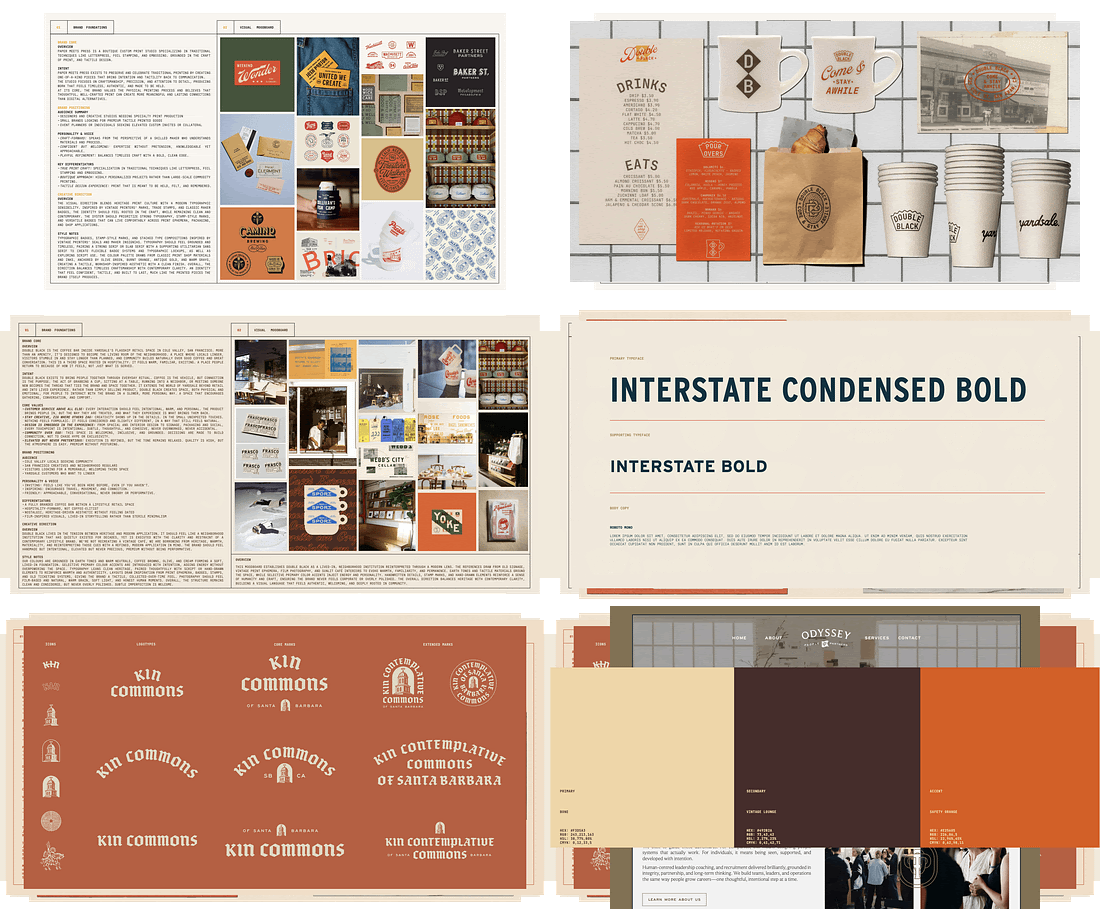
Before we design anything, every project begins with what we call the Blueprint.
This is where we work through the Brand Core and Visual Direction. It sets the foundation for everything that comes next.
I won’t go too deep into that part here, because I’ve covered it in previous issues, but in very simple terms, this stage answers two questions:
Who are you as a brand?
And what should that look and feel like visually?
The depth of the discovery work we do in this phase, and how we present this document, ranges across our tiers. But once that direction is clear and signed off by the client, that’s when the actual design work begins.
Here’s how the 3 tiers look:
Core Build
A clean identity that gets you off the ground.
This is our lightest package, and it’s designed for new businesses or side projects that simply need to look sharp and professional.
Think of it as the minimum effective toolkit. You’re not building a deep brand strategy here. The focus is on creating a clear visual identity that feels considered and cohesive, so you can launch confidently.
Typically, this includes:
A small logo system (icon, logotype, and combination mark)
A curated colour palette
Typeface selection
A simple visual reference document
In other words, you leave with a real identity system, not just a single logo file.
This tier works well for:
New businesses
Side projects
Small brands with limited budgets
Founders who simply need something clean and professional
It’s fast, focused, and practical.
Base Build
A well-rounded identity with strategic direction.
This is where branding starts to move beyond just visuals. In a Base Build, we still design the identity system, but we also start defining the thinking behind it.
That means digging deeper into things like: Mission, vision, and values, Brand positioning, Who the audience actually is, and What makes the business different.
From there, we expand the identity itself. Instead of just a few marks, you’re getting
A larger mark suite (icon, logotype, combination mark, extended mark, supporting mark)
As well as type and colour choice, you get application guidance
Initial asset design
You’ll also receive a brand guide, outlining how to use these elements, which becomes the reference point for your team moving forward.
This tier works best for:
Businesses that are growing
Brands that feel scattered and want alignment
Teams that need something they can share internally
You’re not just leaving this with a logo, but with a system people can actually use.
Brand Build
The full brand ecosystem. This is where brand becomes a strategic asset.
In this tier, we go deep into both strategy and application. We’re defining the narrative, the positioning, the voice, and the audience, and then translating all of that into a robust visual identity.
The design system expands significantly as well. You’re looking at things like:
A full mark suite (icon, 2 logotypes, 2 combination marks, 2 extended marks, 2 supporting marks)
Extended typography systems
Expanded colour palettes
Messaging foundations
Visual direction for photography and media
Real-world applications like packaging, merch, or social systems
All of it then gets documented in a comprehensive brand guide that acts as a playbook for the business moving forward.
This tier is designed for:
Established or scaling businesses
Brands investing in long-term positioning
Companies preparing for larger launches or expansion
The Big Takeaway
The biggest misconception around branding is that every business needs the same level of brand work. Man, I used to try to push the majority of clients up to that top tier, because I wanted them to get the “most” out of their brand. The truth is that a lot of small businesses don’t need that depth.
A startup doesn’t need the same system as a national brand. And a local service business doesn’t need the same strategic depth as a venture-backed company preparing to scale.
Good branding should match the stage of the business, and sometimes that just means a clean identity that gets you moving; sometimes it means building a full ecosystem that can support a fast-growing company.
The important thing isn’t the number of deliverables, but that the brand is clear, intentional, built for how the business actually operates, and the audience they want to connect with
If you can get that right, you’re already ahead of most brands out there.
If you want to see the full breakdown of what’s included in each of these tiers, along with timelines and pricing, you can check that out here.
That page goes a bit deeper into the weeds on deliverables, but hopefully, this issue gave you a clearer picture of how and why those pieces scale depending on the stage of the business.
I’d love to hear from both sides of the fence on this one.
If you’re a designer or running your own studio, how do you structure your deliverables and pricing tiers? Has anything shifted for you over the years?
And if you’re a business owner, I’m curious what your experience has been like working with designers. Did you feel clear on what you were getting going into the project, or did the process surprise you?
Either way, feel free to jump into the comments and share your take. Always good to hear how others approach this stuff.
Until next week, friends!
Rory