Brand Guidelines Are a Starting Point, Not a Finish Line
A Case for Stress-Testing a Brand Before Freezing It.
It’s natural for us as humans to want order. To control the controllable. To set things up once, lock ‘em in, and move on. I see this all the time when we’re on intro calls, review calls, or project handoff calls, especially when the topic of brand guidelines comes up.
People want clarity. They want something they can point to and say, “This is the brand. This is how we use it. Always.”
And it makes total sense. But before I get into where my thinking has shifted a bit on this over the years, it’s probably worth breaking down what we actually mean when we talk about brand documents, because “brand guidelines” can mean a lot of different things depending on who you’re talking to.
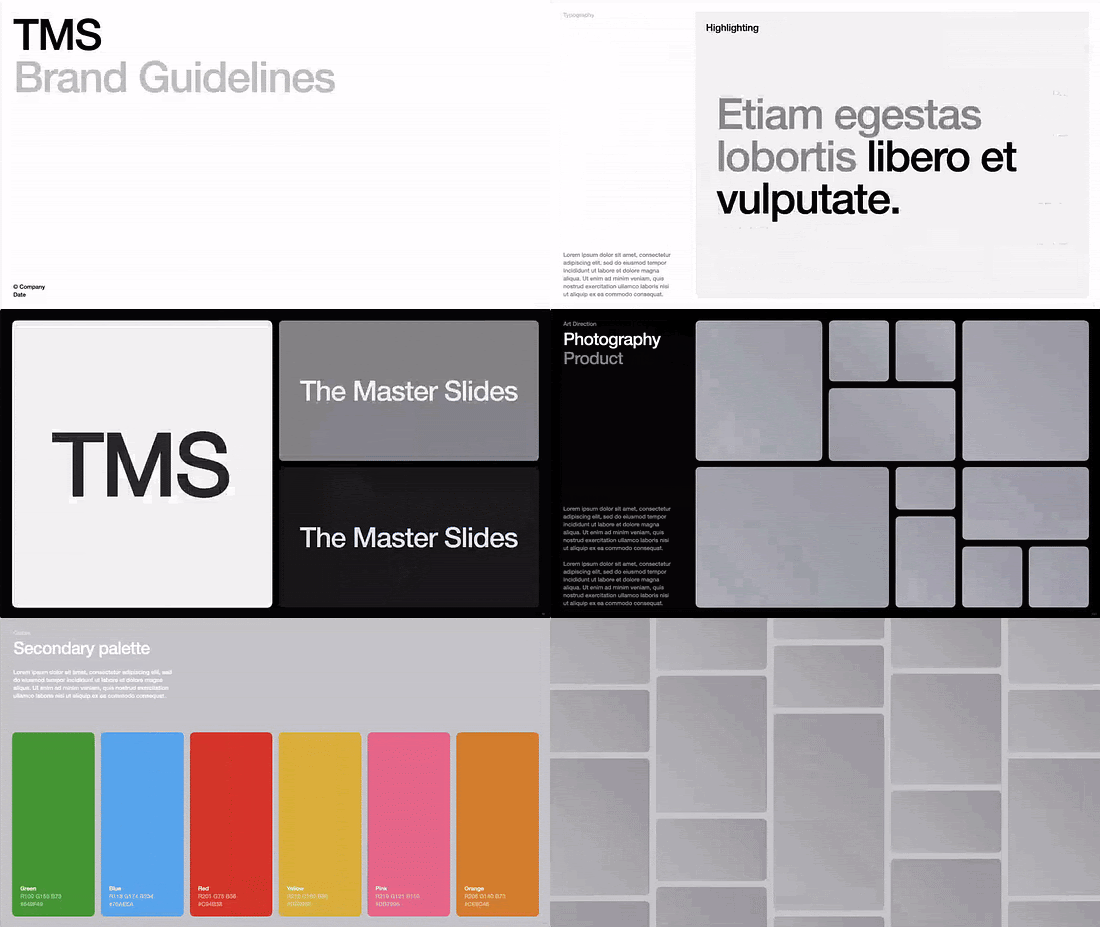
Across our three tiers, here’s how we think about them:
At the lightest end, there’s the Brand Overview Document. This is a clean, visual snapshot of your core brand elements. Logos, colours, type, a quick sense of the vibe. It’s meant to be referenced, not studied.
Next is a Foundational Brand Guide. This is a bit more meat on the bones. Visual identity, some written brand pillars, positioning, and guidance that’s useful internally or for light external sharing.
And then there’s the Comprehensive Brand Guide. This is the big one. Visual identity, strategy, personality, messaging, creative direction, plus the do’s and don’ts. It’s built to be the go-to reference for teams, partners, collaborators, anyone touching the brand.
As you move through those, they get progressively more “guidey”. From “here’s the ingredients” to “here’s how to cook the meal, and here’s how to make sure it actually tastes good
Now, here’s where things get interesting.
We work primarily with small to mid-sized businesses, and what we’re finding more and more is that the most exciting part of a new brand doesn’t always happen inside a PDF. It happens when that brand actually starts getting used. When it’s applied, tested, pushed a little, and occasionally pulled back.
I’ll use a real example from a project we’re in the middle of right now.
We started with a full brand identity, one that includes a comprehensive brand guide. As part of that build, we also designed the first round of real-world collateral. Business cards, merch, stationery, social posts, a landing page. All part of the agreed deliverables.
We presented it. The client loved it. No revisions. No tweaks. Full trust. Let’s go. Which, by the way, is always the goal, and really nice when that happens straight out the gate.
But even with that sign-off, it still felt like there was more in the tank. More to explore. More to pull from the identity, without breaking it.
So we made a call to hold off on delivering the final brand guide.
Not because it wasn’t ready, but because we wanted to keep stress-testing the brand in real-world application first. Designing supporting marks. Dialling messaging for specific use cases. Letting the brand start to build its own little universe before freezing it in place.
And that got me thinking: Have we, in the past, pulled the trigger on brand guideline documents before the brand has even had a chance to live?
Because traditionally, that’s the process, right? Design the brand, package it up, hand over the files and the guide, and send it out into the world.
Sometimes it gets used correctly. Sometimes it gets butchered. And sometimes, which is usually the best case, we stay involved. We keep working with the client. The brand evolves, matures, gains confidence. It gets better with age because it’s actually being used.

And that is where my thinking has shifted a bit.
Yes, brand guidelines are useful. No question. Especially for businesses with multiple team members, partners, or collaborators touching the brand.
But for brand owners, and for designers, sticking too rigidly to a guideline can sometimes become a burden. It can stop you from making really cool stuff. It can prevent you from leaning harder into what the brand is becoming as it grows.
So here’s where I’ve landed on it, but I’d love to hear others thoughts:
Use brand guidelines exactly as that. Guidelines. Not law. Not something that can never be questioned. I think of them more like an anchor. A home base. Something you can return to when things drift too far, or when an experiment doesn’t land quite how you’d imagined.
They should give you confidence to explore, rather than fear of getting it “wrong”.
So if you’re a brand owner, I’d genuinely love to hear how you use your existing brand guidelines, if you have them. And if you don’t, what you’d actually want them to do for you?
And if you’re a designer, what’s your approach? When do you deliver them? How often do you revisit them? Does what you hand over change depending on the scope or tier of the project?
TL;DR
Brand guidelines are a great tool, but they’re not the gospel. They’re meant to guide, not handcuff. Especially for small to mid-sized brands, some of the best work happens after launch, when the brand is actually being used, tested, and stress-tested in the real world. Use your guidelines as a home base you can return to, not a rulebook that stops you from exploring. In my opinion brands get better by being lived in and used, not locked in and frozen.
Sign off
Well folks, that’s where my head’s at this week.
If this sparked a thought, a disagreement, or a “yep, been there,” I’d genuinely love to hear how you’re using (or ignoring) brand guidelines in your own work. Drop a comment and let’s compare notes.
Rory